The Puerto Rican Parrot
The Puerto Rican parrot, known by its Taino name iguaca, is one of the world's rarest birds and the only parrot native to the United States. Bright green with a red forehead and blue-tipped wings, it once numbered in the hundreds of thousands, then crashed to just 13 wild birds by 1973. Its recovery, centered on El Yunque's Iguaca Aviary, is one of conservation's hardest-won stories. Here is that story, and your real odds of spotting one.
How Endangered Is the Puerto Rican Parrot?
The Puerto Rican parrot is still one of the rarest birds on earth, even after decades of recovery. Before European settlement, the iguaca numbered in the hundreds of thousands across Puerto Rico. Centuries of deforestation for agriculture erased its habitat, and by 1973 only about 13 remained in the wild, all in El Yunque. That year the recovery program, launched in 1972, opened its first aviary here to breed birds and release them. Slowly, it worked, and the wild flock began to climb.
How Did the Puerto Rican Parrot Survive Hurricane Maria?
The Puerto Rican parrot survived Hurricane Maria mainly because of the captive flock. In September 2017 the storm tore through El Yunque and cut the wild flock from 56 birds to only a couple of survivors, a devastating setback after decades of work. But the captive birds, sheltered in the aviary's storm bunker, came through, and releases resumed. By 2025 the El Yunque wild population had climbed to at least 75, the highest in the program's history. Across all three wild sites, El Yunque, Rio Abajo, and Maricao, there are now roughly 250 parrots in the wild, with several hundred more in captive breeding.
How Many Puerto Rican Parrots Are Left?
Roughly 250 Puerto Rican parrots live in the wild today across three sites, including at least 75 in El Yunque, with several hundred more in captive breeding. This timeline shows how the population got here:
| When | Wild Puerto Rican parrots | What happened |
|---|---|---|
| Before European settlement | Hundreds of thousands | Found across Puerto Rico |
| 1973 | About 13, all in El Yunque | After centuries of deforestation, the recovery program (launched 1972) opens its first aviary in El Yunque |
| Before September 2017 | 56 in El Yunque | Decades of releases rebuild the wild flock |
| After Hurricane Maria, 2017 | Only a couple in El Yunque | Captive birds survive in the aviary's storm bunker |
| 2025 | At least 75 in El Yunque; roughly 250 across 3 wild sites | Highest El Yunque count in the program's history |
Can You See a Puerto Rican Parrot in El Yunque?
Seeing a wild Puerto Rican parrot in El Yunque is rare and never guaranteed. The birds live in the higher forest and streak fast through the canopy, and you are far more likely to hear their raucous flight call than to spot the green flash that makes it. Treat a sighting as a lucky bonus. Even without one, knowing they are up there, pulled back from the edge of extinction, changes how the forest feels.
Your best bet is simply time outdoors in the rainforest, eyes on the canopy and ears open. Our El Yunque trails guide covers where to walk, the best time to visit guide helps you plan around weather and crowds, and the forest's other famous voice, the coqui frog, is far easier to hear.
Explore the parrot's rainforest
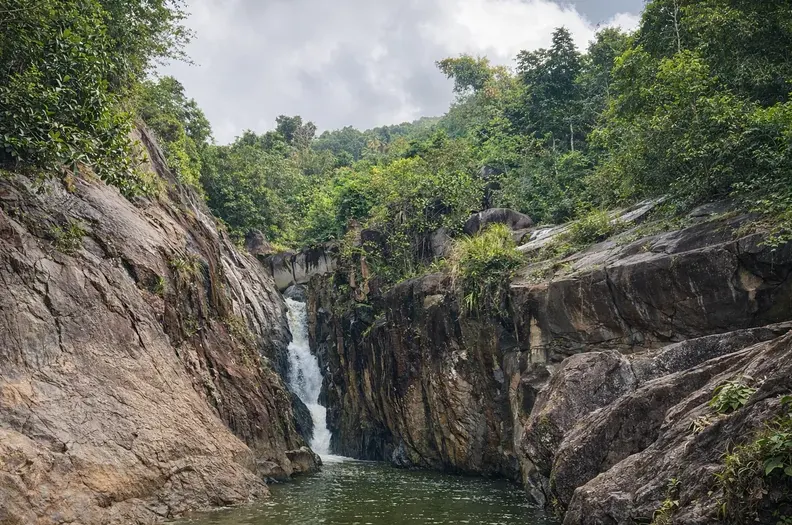
The guided rainforest swimming tour travels through the parrot's rainforest range on El Yunque's quiet south side, with natural pools and waterfalls along the way. A parrot sighting is rare and never promised, but the forest itself is the reward. Questions? Call +1-787-209-2127.
- $89 per person, self-drive or Rio Grande, Luquillo or Fajardo pickup
- $129 per person with San Juan hotel pickup
- About 5 to 7 hours, ages 4+
Free cancellation up to 24 hours before. Unsafe river or weather conditions mean a reschedule or full refund. Paradise Seekers PR, 4.7 stars from 200+ TripAdvisor reviews.
Puerto Rican Parrot Questions
What is the Puerto Rican parrot?
The Puerto Rican parrot, or iguaca, is a bright green parrot with a red forehead and blue-tipped wings, about a foot long. The Puerto Rican parrot is endemic to Puerto Rico and the only native parrot in the United States, and it is one of the world's rarest birds, with its oldest wild flock in El Yunque.
How endangered is the Puerto Rican parrot?
The Puerto Rican parrot is one of the most endangered birds in the world. The wild population hit its low point of about 13 birds, all in El Yunque, in 1973. Decades of captive breeding and releases have brought the species back, but the wild flocks remain small and vulnerable to hurricanes.
How many Puerto Rican parrots are left?
Roughly 250 Puerto Rican parrots live in the wild today, spread across three sites: El Yunque, Rio Abajo, and Maricao. As of 2025, El Yunque's wild flock reached at least 75 birds, the highest in the recovery program's history. Several hundred more Puerto Rican parrots live in captive breeding aviaries.
Can you see a Puerto Rican parrot in El Yunque?
Seeing a Puerto Rican parrot in El Yunque is possible but rare, and you are far more likely to hear one than see one. The parrots live in the higher forest and move fast through the canopy. Treat a sighting as a lucky bonus rather than something to expect on a visit.
Why is the Puerto Rican parrot called the iguaca?
The Puerto Rican parrot is called the iguaca because that is the name the indigenous Taino gave the bird, meant to imitate the loud call it makes in flight. The name has outlasted centuries of change, and the aviary in El Yunque that leads the parrot's recovery, the Iguaca Aviary, is named after it.
What does the Puerto Rican parrot sound like?
The Puerto Rican parrot makes a loud, raucous call in flight, the sound the Taino captured in its name, iguaca. In El Yunque that call is usually the first sign a parrot is near, because the birds streak fast through the canopy. Most visitors who encounter one hear it well before seeing a green flash.
What is the scientific name of the Puerto Rican parrot?
The scientific name of the Puerto Rican parrot is Amazona vittata, and the species is also known as the Puerto Rican amazon. In Spanish it is the cotorra puertorriquena, and its oldest name is iguaca, the Taino word that imitates its loud flight call. All four names refer to the same bird.
Why did the Puerto Rican parrot almost go extinct?
The Puerto Rican parrot almost went extinct because centuries of deforestation for agriculture erased its habitat. Before European settlement the iguaca numbered in the hundreds of thousands across Puerto Rico, but the cleared land left only a tiny remnant flock in El Yunque. That collapse triggered the recovery program, launched in 1972, that still protects the species.
What is the Iguaca Aviary?
The Iguaca Aviary is the breeding facility in El Yunque at the center of the Puerto Rican parrot's interagency recovery program. The program's first aviary opened in El Yunque in 1973 to breed birds and release them into the wild. The aviary takes its name from the bird's Taino name, iguaca.
Did any Puerto Rican parrots survive Hurricane Maria?
Some Puerto Rican parrots survived Hurricane Maria, though the wild flock was nearly wiped out. The September 2017 storm cut El Yunque's wild population from 56 birds to only a couple of survivors. The captive birds, sheltered in the aviary's storm bunker, came through, and their releases rebuilt the wild flock in the years that followed.
Where do Puerto Rican parrots live in the wild?
Wild Puerto Rican parrots live at three sites in Puerto Rico: El Yunque, Rio Abajo, and Maricao. El Yunque holds the oldest wild population, and its parrots live in the higher forest, moving fast through the canopy. With several hundred more parrots in captive breeding, the species no longer rests on a single flock.
Does any El Yunque tour guarantee seeing a Puerto Rican parrot?
No El Yunque tour can honestly guarantee seeing a Puerto Rican parrot, because sightings are rare. The rainforest swimming tour travels through the parrot's rainforest range on the forest's south side, at $89 per person or $129 with San Juan hotel pickup. Treat any parrot sighting there as a lucky bonus.