The History of El Yunque
El Yunque history runs from Taino sacred ground to a Spanish Crown reserve in 1876, a U.S. forest reserve in 1903, and El Yunque National Forest since 2007. To the indigenous Taino it was the throne of their supreme god. To Spain it became one of the earliest protected forests in the Americas. And to the United States it became a national forest shaped by Depression-era work crews whose roads and towers you still walk today.
El Yunque History Timeline
The key dates in the history of El Yunque, from the Taino era to the 2007 renaming:
| When | What happened |
|---|---|
| Taino era | The Taino revere the mountains as the throne of Yucahu and name them Yuke, "white lands" |
| 1876 | King Alfonso XII of Spain sets the forest aside as a Crown reserve to protect its timber and water |
| 1898 | The United States takes control of Puerto Rico |
| January 17, 1903 | President Theodore Roosevelt establishes the Luquillo Forest Reserve |
| 1930s | The Civilian Conservation Corps builds PR-191, the trails, the Mt Britton and Yunque Peak towers, and the Bano Grande and Bano de Oro pools |
| 1935 | Renamed the Caribbean National Forest |
| World War II | The military uses the peaks as a radar site |
| 2007 | An executive order renames it El Yunque National Forest |
Why Was El Yunque Sacred to the Taino?
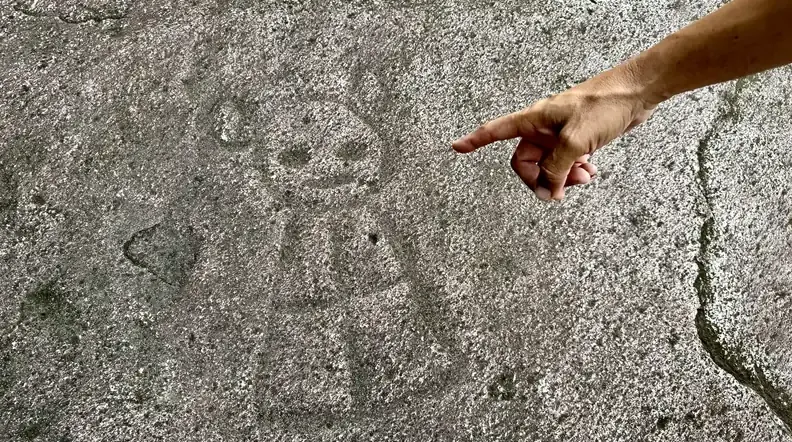
El Yunque was sacred to the Taino because they believed it was the throne of Yucahu, their supreme god of goodness and fertility, which made the forest the Caribbean equivalent of Mount Olympus. The name itself descends from the Taino word Yuke, meaning white lands, for the clouds that wreath the peaks. The Taino petroglyphs still found in the forest are the marks they left on this landscape; our Taino petroglyphs guide covers them in depth.
When Did Spain Protect El Yunque?
Spain protected El Yunque in 1876, when King Alfonso XII set the forest aside as a Crown reserve to protect its timber and water. Spanish colonization had stripped Puerto Rico's lowland forests for timber and farmland, and the Luquillo highlands held the last untouched tracts. That decision made the forest one of the oldest protected forest reserves in the Western Hemisphere, established only a few years after Yellowstone became the first national park in the United States.
How Did El Yunque Become a U.S. National Forest?
The forest became a U.S. forest reserve after the United States took control of Puerto Rico in 1898: President Theodore Roosevelt established the Luquillo Forest Reserve on January 17, 1903, and it was renamed the Caribbean National Forest in 1935. In the 1930s, the Civilian Conservation Corps transformed it for visitors, building the PR-191 road, the trail network, the Mt Britton and Yunque Peak towers, and the Bano Grande and Bano de Oro pools, much of which still stands. During World War II, the military even used the peaks as a radar site.
When Was El Yunque National Forest Named?
El Yunque National Forest got its current name in 2007, when an executive order restored the forest's Taino roots by changing Caribbean National Forest to El Yunque National Forest. Today its nearly 29,000 acres supply fresh water to about a fifth of Puerto Rico's population and shelter species found nowhere else, including the endangered Puerto Rican parrot and the coqui frogs. Standing under its canopy, you are in a place that has been protected for well over a century, and honored far longer than that.
Walk through the history
The Adventure Expedition option of the rainforest swimming tour visits Taino petroglyphs with cultural context from local guides, pairing the forest's oldest story with natural pools and waterfalls on the forest's south side. The petroglyphs are only on the Adventure Expedition. Questions? Call +1-787-209-2127.
- Adventure Expedition with Taino petroglyphs: $129 per person, self-drive or Rio Grande, Luquillo or Fajardo pickup
- $169 per person with San Juan hotel pickup
- Pool & Waterfall tour without the petroglyphs: $89, or $129 with San Juan hotel pickup
- About 5 to 7 hours; helmets included, sneakers required on the Adventure Expedition
Free cancellation up to 24 hours before. Unsafe river or weather conditions mean a reschedule or full refund. Paradise Seekers PR, 4.7 stars from 200+ TripAdvisor reviews.
El Yunque History Questions
What does the name El Yunque mean?
The name El Yunque comes from the Taino word Yuke, meaning white lands, a reference to the cloud-covered peaks. Over time it was linked to the Spanish word yunque, meaning anvil, which some say the flat-topped peak resembles. Both threads live on in the name, and the 2007 renaming put it on the national forest itself.
How old is El Yunque as a protected forest?
El Yunque has been a protected forest since 1876, when the Spanish Crown under King Alfonso XII set it aside as a forest reserve. That makes the forest one of the oldest protected forest reserves in the Western Hemisphere, established only a few years after Yellowstone became the first U.S. national park.
Why was El Yunque sacred to the Taino?
The indigenous Taino held El Yunque sacred because they believed it was the throne of Yucahu, their supreme god of goodness and fertility. That belief made the forest the Caribbean equivalent of Mount Olympus. The Taino revered the cloud-covered peaks as the home of gods and spirits, and left petroglyphs that survive today.
What did the Civilian Conservation Corps build in El Yunque?
The Civilian Conservation Corps built much of what visitors to the rainforest still use. During the 1930s its crews built the main PR-191 road, the trails, the Mt Britton and Yunque Peak observation towers, and the Bano Grande and Bano de Oro pools. Many of these Depression-era structures are still standing in the forest today.
When was El Yunque National Forest named?
El Yunque National Forest was named in 2007, when an executive order replaced the name Caribbean National Forest to better reflect the forest's Taino and Puerto Rican cultural heritage. The Caribbean National Forest name had been in use since 1935, and before that the land was the Luquillo Forest Reserve, established in 1903.
Is El Yunque the only tropical rainforest in the U.S. National Forest System?
El Yunque is the only tropical rainforest in the U.S. National Forest System, located in northeastern Puerto Rico. Its nearly 29,000 acres shelter species found nowhere else, from coqui frogs to the Puerto Rican parrot. That uniqueness is part of why the forest has stayed protected since the Spanish Crown reserve of 1876.
Who established El Yunque as a U.S. forest reserve?
President Theodore Roosevelt made the Luquillo highlands a U.S. forest reserve, the Luquillo Forest Reserve, on January 17, 1903. Roosevelt acted five years after the United States took control of Puerto Rico in 1898, carrying forward the protection Spain had first granted the Luquillo highlands as a Crown reserve in 1876.
Why did the Spanish Crown protect El Yunque in 1876?
King Alfonso XII of Spain protected El Yunque in 1876 to save its timber and water. Spanish colonization had stripped Puerto Rico's lowland forests for timber and farmland, leaving the Luquillo highlands as the last untouched tracts, so the Crown reserved them as a forest reserve before they could be lost as well.
Where can you see El Yunque's history today?
El Yunque's history is easiest to see in the Civilian Conservation Corps work of the 1930s that still stands: the PR-191 road, the trail network, the Mt Britton and Yunque Peak towers, and the Bano Grande and Bano de Oro pools. Older still are the Taino petroglyphs, which are unmarked and best visited with a guide.
Can you still see Taino petroglyphs in El Yunque?
Taino petroglyphs still survive in El Yunque today, but the carvings are unmarked, so they are visited with a guide. Paradise Seekers PR includes the petroglyphs only on the Adventure Expedition of its rainforest swimming tour, at $129 per person, or $169 with San Juan hotel pickup. The $89 Pool & Waterfall tour does not visit them.
How much of Puerto Rico's water comes from El Yunque?
El Yunque supplies fresh water to about a fifth of Puerto Rico's population from its nearly 29,000 acres. Water has been part of the forest's story for a long time: when King Alfonso XII made it a Crown reserve in 1876, protecting its water, along with its timber, was one of the stated reasons.