The Coqui Frogs of El Yunque
Coqui frogs are tiny tree frogs native to Puerto Rico, named for the ko-kee call the males sing from dusk onward, and the coqui is the island's most beloved national symbol. Barely an inch long, it is among the loudest amphibians on earth. About 17 coqui species are found only in Puerto Rico, and 13 of them live in El Yunque, where their nighttime chorus is the sound of the rainforest itself. Here is what the call means and how to hear it.
What Is a Coqui Frog?
A coqui frog is a small tree frog in the genus Eleutherodactylus, which means "free toes," a nod to the unwebbed, pad-tipped feet that grip leaves and bark. Coquis skip the tadpole stage entirely, hatching straight into tiny frogs, which is part of why they thrive in the trees rather than in water. They have lived in Puerto Rico for tens of millions of years, and their image appears on everything from t-shirts to art across the island.
Coqui frogs at a glance
| Fact | Coqui frog |
|---|---|
| Genus | Eleutherodactylus ("free toes") |
| Size | About one inch long |
| Species in Puerto Rico | About 17, all endemic |
| Species in El Yunque | 13 |
| Who calls | Males only |
| Call volume | Around 100 decibels from a few feet away |
| When they call | Dusk through the night |
| Life cycle | No tadpole stage; hatch as tiny frogs |
| Range outside Puerto Rico | Accidentally introduced elsewhere, including Hawaii, where it is invasive |
What Does the Coqui's Ko-Kee Call Mean?
The coqui's ko-kee call is a two-note message from a male frog, and each note has its own job. The first note, "co," warns other males to keep their distance and marks territory. The second note, "kee," is aimed at females as a mating call. Only the males call. The chorus builds after sunset and carries a surprising distance; the call has been measured near 100 decibels from a few feet away. A well-loved local legend says the call means "I love you," though that is folklore rather than translation.
When and Where Can You Hear Coqui Frogs in El Yunque?
You hear coqui frogs in El Yunque at full volume from dusk through the night, so an evening near the forest is the surest way to catch the chorus. During the day the forest is much quieter: on a daytime visit you may hear only scattered calls in shaded, humid spots near streams and dense vegetation. Our best time to visit El Yunque guide covers seasons and times of day.
The forest holds species from the lowland trails up to the misty peaks, though some montane species have declined in recent decades, partly from a fungal disease that affects frogs at higher elevations. The rainforest is also home to the endangered Puerto Rican parrot.
How Do You Find a Coqui Frog at Night?
Finding a coqui frog takes patience, because the frogs are tiny and far easier to hear than to see. These steps use what is known about where and when coquis call:
- Go out after dusk, when the males start calling and the chorus builds.
- Pick a humid, leafy spot near a stream or dense vegetation.
- Follow a single ko-kee call rather than the whole chorus, and move slowly and quietly.
- Check the surfaces of leaves and bark, where the pad-tipped toes let coquis cling.
- Use a dim light, look without touching, and leave the frog where you found it.
Explore the coqui's rainforest by day
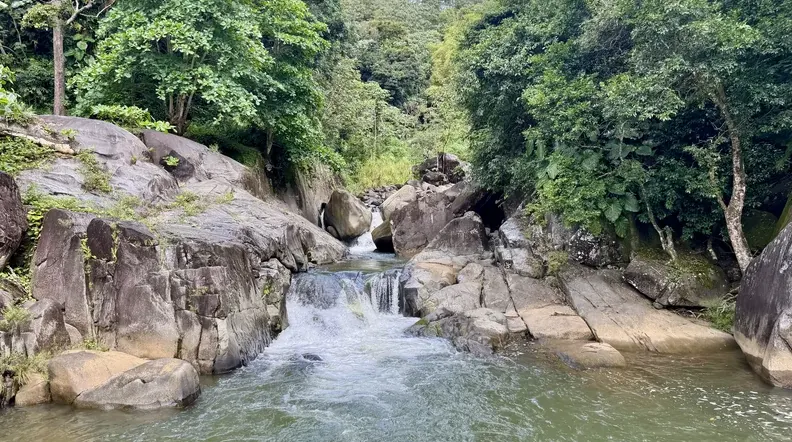
The guided rainforest swimming tour runs in daytime through the humid, green south side of El Yunque, with natural pools and waterfalls along the way. Coquis call mostly after dusk, so expect scattered calls in shaded, wet spots rather than the full night chorus. Questions? Call +1-787-209-2127.
- $89 per person, self-drive or Rio Grande, Luquillo or Fajardo pickup
- $129 per person with San Juan hotel pickup
- About 5 to 7 hours, ages 4+
Free cancellation up to 24 hours before. Unsafe river or weather conditions mean a reschedule or full refund. Paradise Seekers PR, 4.7 stars from 200+ TripAdvisor reviews.
Coqui Frog Questions
What is a coqui frog?
The coqui is a tiny tree frog native to Puerto Rico, named for the ko-kee call the males make at night. The coqui frog is about one inch long and is a national symbol of the island. About 17 coqui species are endemic to Puerto Rico, and 13 of them live in El Yunque.
What does the coqui frog's ko-kee call mean?
The coqui frog's ko-kee call is a two-part message from a male: the co note warns rival males away and marks territory, and the kee note attracts females. Only male coquis call, starting at dusk. A popular local legend says the call means I love you, but that is folklore rather than translation.
How loud is a coqui frog?
A coqui frog's call has been recorded at around 100 decibels from a few feet away, which makes it one of the loudest amphibian calls on earth. That volume comes from a frog barely an inch long. In El Yunque, many males calling together after sunset create a chorus that carries a surprising distance.
When can you hear coqui frogs in El Yunque?
Coqui frogs in El Yunque call from dusk through the night, so the chorus is loudest in the evening. During the day you may only hear scattered calls in shaded, humid spots near streams and dense vegetation. For the full chorus, plan to be near the forest as the light fades.
How many coqui species live in El Yunque?
Thirteen of Puerto Rico's roughly 17 coqui species are found in El Yunque National Forest. They range from lowland species near the trails to montane species on the misty peaks. Some of the mountain coqui species have declined in recent decades, partly due to a fungal disease that affects frogs at higher elevations.
Are coqui frogs only found in Puerto Rico?
Coqui frogs are native only to Puerto Rico, where they have lived for tens of millions of years. The common coqui has been accidentally introduced elsewhere, including Hawaii, where it is considered invasive. Outside those introductions, the coqui remains a Puerto Rican animal, and its call is still the signature night sound of the island.
What does a coqui frog look like?
A coqui frog is a tiny tree frog, barely an inch long, with unwebbed, pad-tipped toes that let it grip leaves and bark. Its genus name, Eleutherodactylus, means free toes for that reason. Because coquis are so small and mostly active after dark, many visitors hear hundreds without ever seeing a single frog.
Can you see coqui frogs in El Yunque?
You can see coqui frogs in El Yunque, but they are far easier to hear than to see. The frogs are most active after dark and cling to leaves and bark. Your best chance of spotting one is after dusk in a shaded, humid spot near a stream, following a single call slowly with a dim light.
Do coqui frogs have tadpoles?
Coqui frogs do not have tadpoles; they skip that stage entirely and hatch directly into tiny frogs. That is part of why coquis thrive in the trees rather than in water. Their genus, Eleutherodactylus, means free toes, a nod to the unwebbed, pad-tipped feet that let them grip leaves and bark.
Why is the coqui a symbol of Puerto Rico?
The coqui is a symbol of Puerto Rico because it is native only to the island and its ko-kee call is the signature sound of Puerto Rican nights. Coquis have lived there for tens of millions of years, and their image appears on everything from t-shirts to art across the island.
Why are some coqui frogs declining in El Yunque?
Some montane coqui species in El Yunque have declined in recent decades, partly because of a fungal disease that affects frogs at higher elevations. The lowland coquis near the trails are still easy to hear at night. If you go looking for coquis, stay on marked trails and leave every frog where you find it.
Can you hear coqui frogs on a guided El Yunque tour?
You can sometimes hear coqui frogs on a daytime guided El Yunque tour, but expect scattered calls in shaded, wet spots, not the full night chorus. Coquis call mostly from dusk onward. The rainforest swimming tour spends the day in humid forest on the south side, at $89 per person or $129 with San Juan hotel pickup.